
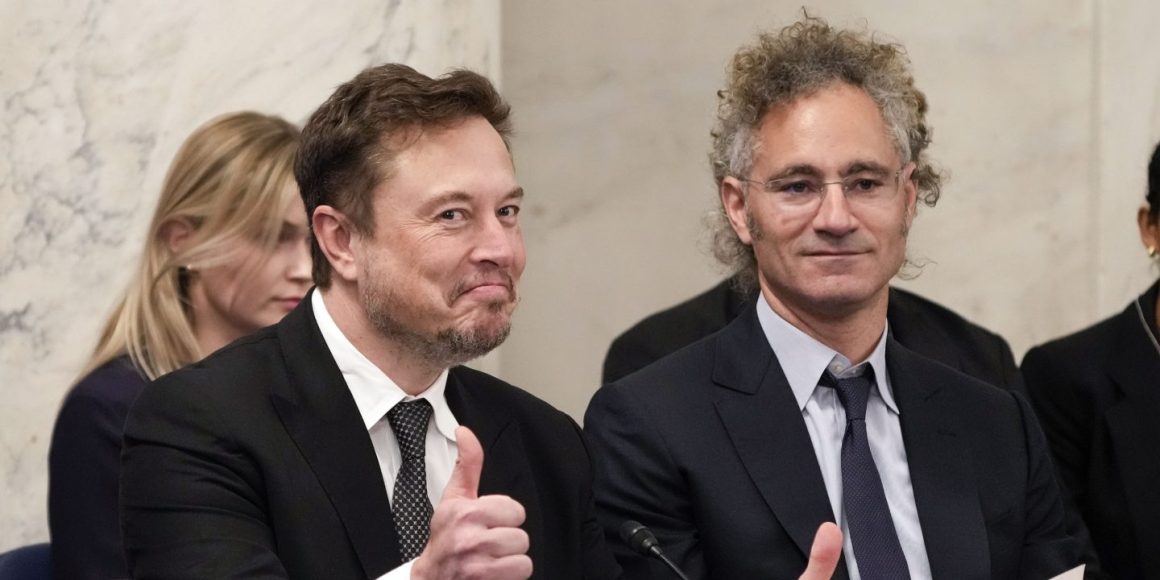
Is the Era of “AI Ethics” Officially Over?
Over the weekend, Palantir CEO Alex Karp posted a 22‑point manifesto on X summarising the core arguments of his book The Technological Republic: Hard Power, Soft Belief, and the Future of the West.
The response was immediate, and polarising.
Supporters framed it as long‑overdue realism.
Critics described it as dystopian, reckless, or outright dangerous.
Regardless of where you land, one thing is undeniable:
And it forces a question the tech industry has largely avoided:
Are we still debating AI ethics — or have we already moved into an era where those debates no longer shape outcomes?
What Karp Is Actually Saying
A lot of the reaction online has been emotional. Strip that away, and Karp’s position is remarkably consistent, and blunt.
1. AI weapons are inevitable
Karp directly rejects the idea that restraint or ethical hesitation will slow the development of AI‑powered weapons. His argument is not moral, it’s competitive.
He argues that adversaries of the West will not pause innovation to engage in philosophical debate, and that refusing to build such systems doesn’t stop their existence, it only shifts ownership elsewhere.
This is not speculation. Palantir already supplies AI‑enabled systems to defence and intelligence agencies, and Karp is explicit that software should be treated the same way as physical military equipment.
2. The return of national service — including the draft
One of the manifesto’s most controversial points is the call to reconsider mandatory national service, including a military draft.
Karp and his co‑author argue that an all‑volunteer force creates a moral imbalance, where decisions about war are made by people who bear none of its cost.
Their position is that if democracies are serious about defence, risk and responsibility must be shared, not outsourced to a small subset of society.
This suggestion alone has triggered backlash from lawmakers, especially in Europe and the UK, where Palantir holds major government contracts. [gizmodo.com]
3. “AI ethics” has become a luxury belief
Perhaps the most consequential claim in the manifesto is Karp’s dismissal of ongoing AI ethics debates as “theatrical.”
His view: ethical discussions in Western democracies assume time, safety, and optional participation — conditions that no longer exist in a world of accelerating geopolitical competition.
As the manifesto states, adversaries will “proceed” regardless of whether the West is comfortable with the implications.
To Karp, ethics are not irrelevant — but they are subordinate to survival.
Why This Matters Beyond Defence
It would be easy to dismiss this as “Palantir being Palantir.” That would be a mistake.
Karp is not speaking as a lone provocateur. He is articulating a worldview that is quietly gaining traction across:
- Defence technology
- AI infrastructure
- Government procurement
- National security policy
The larger shift is this:
We are moving past AI as a productivity tool
and into AI as national infrastructure.
Once AI is infrastructure, debates change. Speed matters more than perfection. Deployment matters more than intent. Capability matters more than consensus.
This is the same shift we saw with:
- Nuclear power
- Cyber weapons
- Surveillance technology
Each followed the same pattern: ethics were loud early — then quietly sidelined by necessity.
The Decline of “Soft Power”
A core theme in Karp’s manifesto is the claim that soft power is no longer sufficient to maintain global order.
He argues that the post‑Cold War assumption, that norms, institutions, and moral leadership would restrain conflict, no longer holds in an AI‑accelerated world.
In his framing, deterrence is being rebuilt not around atomic weapons, but around AI‑enabled intelligence, targeting, logistics, and decision systems.
That belief has alarmed critics, with some describing the manifesto as a form of “technofascism” or an attempt to normalise perpetual escalation.
But even critics acknowledge the underlying reality: AI is already embedded in military and intelligence operations globally.