
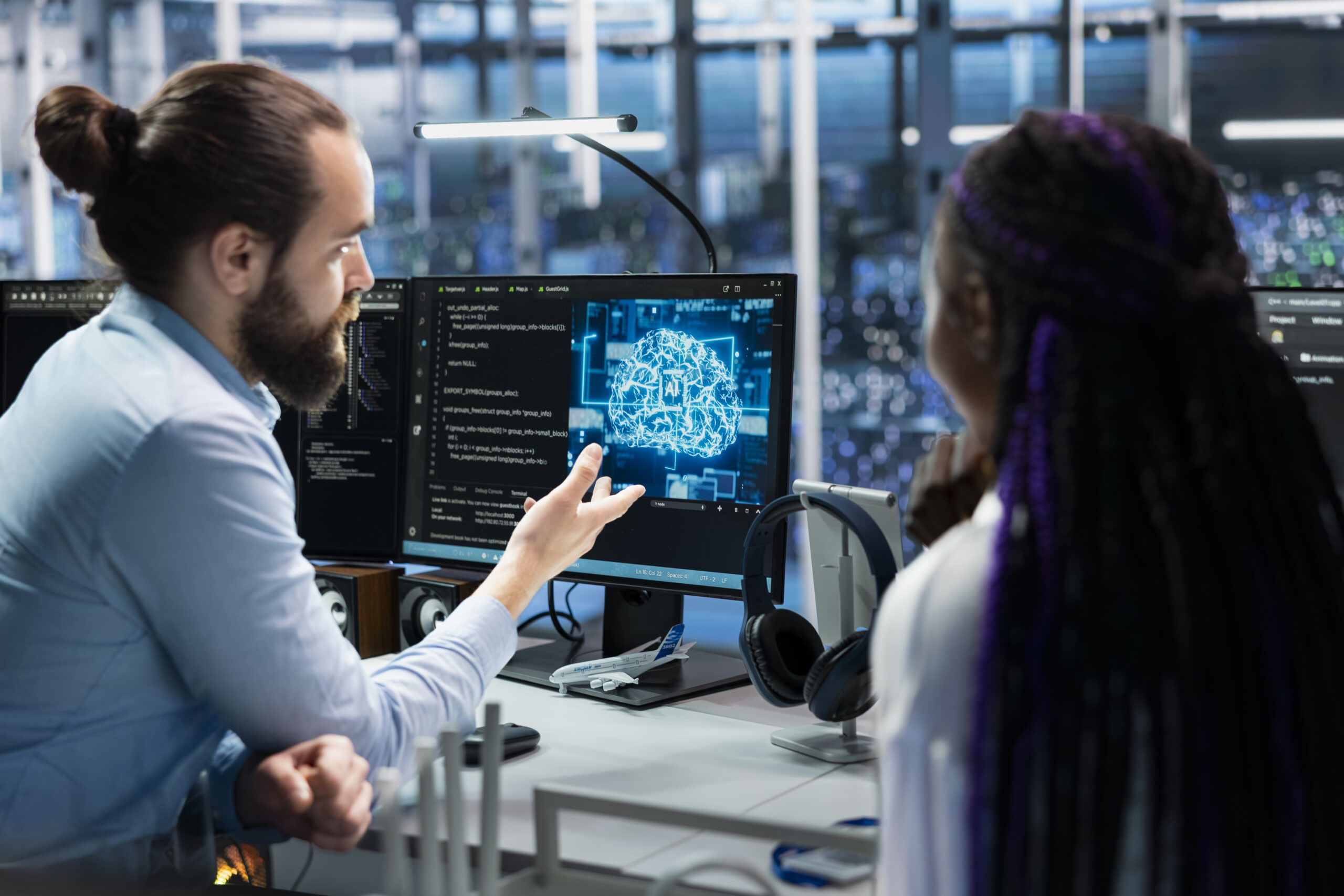
Automation is here… Why Business Leaders Can’t Ignore the Shift.
A few years ago, a new piece of software might have saved a team a few hours a week. Today, a single AI video can change how leaders think about work entirely.
That’s the real shift happening right now in business, not incremental efficiency, but structural change. AI is no longer just assisting humans. It’s beginning to do the work itself.
And leaders who don’t recognize this moment risk optimizing yesterday’s workflows instead of building tomorrow’s companies
What we’re seeing now, especially through AI‑generated video and autonomous agents, is the rise of digital labor. Software doesn’t just help people think faster, it acts. It plans, executes, revises, and scales.
An AI video isn’t just marketing content anymore. It’s proof that:
- Creativity can be automated
- Production can be instant
- Output is no longer constrained by headcount
When leaders watch an AI video that looks real, sounds real, and ships in minutes, something clicks:
“If this can be automated… what else can be?”
That question is the beginning of transformation.
The Hidden Cost of Manual Work
Most organizations aren’t slow because their people aren’t smart.
They’re slow because their workflows are full of friction:
- Manual data entry
- Repetitive approvals
- Copy‑paste reporting
- Follow‑ups that depend on memory instead of systems
These tasks don’t create competitive advantage, but they quietly drain time, energy, and momentum.
AI exposes this inefficiency brutally. When a machine can do in seconds what used to take hours, it becomes impossible to justify keeping things manual “because that’s how we’ve always done it.”
The leaders who win in this next phase will:
- Design workflows assuming automation by default
- Treat AI agents like scalable team members
- Measure speed of execution, not just strategy quality
- Move from “approving work” to “orchestrating systems”
Those who don’t will still be hiring, training, and managing a world that no longer exists.
What This Means for Business in 2026
We are moving from:
- Apps that support people → to
- Systems that run the work
The competitive edge is no longer access to information.
It’s how fast intent turns into action.
Companies that automate first:
- Ship faster
- Learn faster
- Adapt faster
And speed compounds.
“Got Manual Tasks? Let’s Automate That… SaaSberry Can.”
This is where platforms like SaaSberry matter, not as “AI tools,” but as infrastructure for modern leadership.
Automation isn’t about replacing people.
It’s about removing the busywork that prevents them from doing what humans do best: decide, create, and lead.
If an AI video made you stop and rethink what’s possible, that’s not hype.
That’s your intuition catching up to reality.
And the direction is clear:
- Manual processes will disappear
- AI‑run workflows will become standard
- Companies will compete on execution velocity
The only real question left is:
Will AI be working for you, or for your competitors?